Showing posts with label compassion. Show all posts

Sunday, June 5, 2016

June 5, 2016 - Proper 5C


In the name of God – Father, Son, and Holy Spirit. Amen.
            When you’re going through the ordination process, one aspect of the formation is to work as a chaplain intern. So the summer after my first year of seminary, I worked at Alamance Regional Hospital in Burlington. Part of the work was to occasionally stay over-night at the hospital, being on-call for any pastoral emergencies. I’ll never forget the first time that pager went off in the middle of the night, I scrambled to look presentable and rushed down to the ER. There, I watched a man in his early 60s come in on a stretcher. He wasn’t breathing, and the doctors and nurses did everything that they could to revive him, but it was too late. In a hospital, death is a medical diagnosis before it is a pastoral situation, so the doctor has to be the one deliver the bad news to the family in a small waiting. In most situations, including this one, as soon as the doctor did his job of notifying the family, he’d leave the room and it was then my job to do what I could to comfort the family.

Thursday, August 1, 2013

What is Charity?

073113.GotW.Bible.04
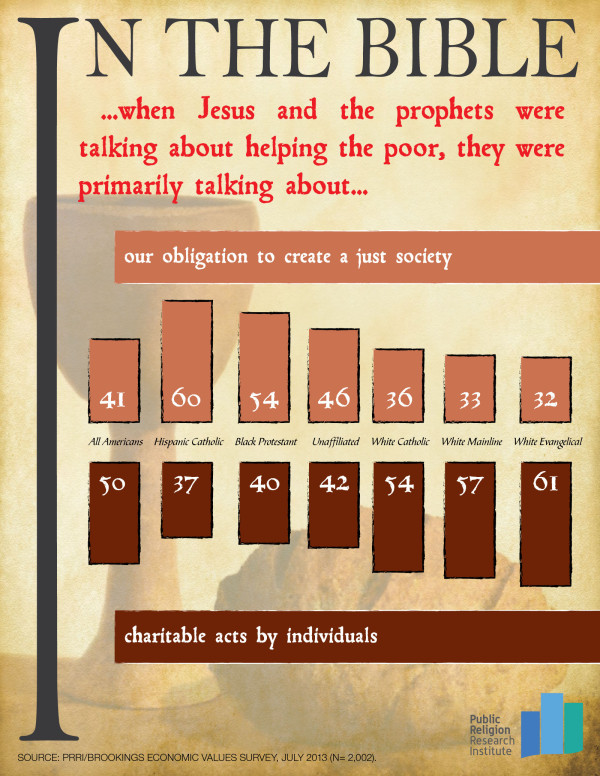
This graphic is making the rounds on Facebook today. Quite interesting. The question is asking what sort of action is called for when we speak of "helping the poor." Is it directly helping a person in poverty through an act of charity (donation, serving at a food shelter, etc.)? Or is it in working to reform and re-envision our culture to be one where the plight of the poor is addressed?

Sunday, October 7, 2012

October 7, 2012 - St. Francis Day


Almighty and eternal God, so draw our hearts to you, so guide our minds, so fill our imaginations, so control our wills, that we may be wholly yours, utterly dedicated unto you; and then use us, we pray, as you will, and always to your glory and the welfare of your people; through our Lord and Savior Jesus Christ. Amen.
            Today we celebrate the Feast of St. Francis, our patron saint. We all know the stories of Francis. He lived from 1181-1226, spending most of his time in Assisi. He is remembered for his great care of the earth and animals. Francis was born into a wealthy family, but rejected his birthright in favor of living more freely for God. We also remember him for developing the usage of crèches or nativity sets. He also founded the order of the Franciscans and received the stigmata during prayer. And we remember him in our community for his ideals of simplicity, compassion, and hope. Today, I want to focus on reading these lessons through the lens of Franciscan spirituality.
            Our readings today center on what some scholars call the Great Invitation, referring to Jesus inviting his audience to “come to me, all of you who are weary and carrying heavy burdens.” Often it is used to give comfort to those in a tough situation, but it’s a rather ironic passage.
            Jesus says that those who are weary should take his yoke upon them, because it is easy and light. The way this saying is often applied, you’d think Jesus was talking about some sort of relaxing massage technique for your shoulders. But yokes are used for work animals, for hard labor, or to detain prisoners. It is ironic that Jesus uses an instrument of hard work as a metaphor for getting rest. Yokes are about submission and labor, no one hearing Jesus would have thought a yoke was restful. But yet Jesus suggests that his yoke is about liberation, freedom, and rest.
Francis understood this irony. He said that true joy comes not from success, but from rejection and suffering, which causes us to think of Jesus’ suffering. He wasn’t saying that suffering is good, but rather is that it is natural and God is present in all situations, the good and the bad. And it is often in those tough situations that we come closest to God. And for that, Francis embraced suffering. Francis lived this irony of finding rest in the yoke of service.
We’ll start with the yoke as a burden before turning to its rest. It is interesting that Jesus speaks about his yoke being easy just a few weeks before his crucifixion. Many of the disciples will also be crucified for following Jesus. That doesn’t seem very light to me. This yoke isn’t a free pass. Francis certainly understood this when he chose to leave his wealthy family for the poverty of serving others.
The work of Francis was about simplicity- working with a single-minded focus on loving and serving those in need. He focused on what was important. He didn’t concern himself with wealth, or prestige, or power because he understood that those are distractions. As we are in the midst of a financial stewardship campaign, this is a good reminder for us to focus on simplicity. Deciding what matters most in life, and aligning our budgets to match accordingly.
Francis also lived compassionately. A quick word study will remind us that compassion is a compound word which literally means to suffer with. Francis certainly bore this yoke of suffering with people and animals. There are stories of him reaching out to lepers and other outcasts. And by serving them, he too became an outcast. Francis often reflected on the suffering of Christ on the cross and strove to compassionately suffer with all those in need for the sake of building the Kingdom of God on earth as it is in heaven.
And Francis had hope. We often think of hope as a nice, uplifting feeling. And that’s not a completely inaccurate view of hope. But hope is hard work. In the prayer of St. Francis, we see that he really had to work to find light, joy, faith, and pardon where there was darkness, sadness, doubt, and injury. As a bishop once remarked “we Christians are called to be a people of miraculous expectation; our ministry is the miracle of our hope.” Hope is what allows us to take on the burden of Jesus’ yoke, even though we know that the cross is on the horizon.
            These virtues of simplicity, compassion, and hope seem wonderful, and they are, but they are also full of hard work. Francis put a lot of emphasis on Creation, because he saw it as the labor of God. I’ve always been partial to the theology of continuing creation- the idea that God didn’t just create everything and then took a leave of absence, but rather that Creation is ongoing. And this makes sense. If the story of Genesis is based on the idea of a week, it only makes sense that the next week starts after the first. Creation is continually being recreated by God. It is not that God was the Creator, but that God is the Creator. God’s work continues today.
Even in the wording of Creation, “let there be…” there is a sense of growing into being. In the Hebrew, the verb for “let there be” is in the imperfect tense, giving a nuance of an uncompleted or ongoing action. God created the light, but he didn’t flip the light switch. Think of it more as a dimmer switch; the light is continually growing brighter. Francis saw his work in Creation as working to continue the Creation to more fully reflect the love and majesty of God.
As we’ve seen in the life of Francis, there is a lot of work to do in taking Jesus’ yoke upon us.  So how is it that all of this work of being yoked to Jesus leads to rest, a rest which we so desperately need? When Jesus says “take my yoke upon you and learn from me” he was likely referring to a double-yoke. This was a common technique where two animals would have been linked together to do harder labor, but to split it evenly to make it possible. There are some tasks that we simply can’t do alone- the task of discipleship is a two-person job. But, ironically, in working with Jesus, we are given a sense of rest, despite our labors.
            This rest comes from the idea of Sabbath found in Genesis. To understand this passage, we must take a critical look at it. I hope this doesn’t come as a surprise to anyone, but this story from Genesis is not a literal one, but it is very theological. This Creation story was very likely written in the 6th century BC, during the time of the Exile in Babylon. The Hebrew people were facing an identity crisis; their world no longer made sense. And so this story began to circulate: that the God of Israel was the Creator of the world. This was an important story for them to tell, because their Babylonian captors claimed that it was Marduk, a Babylonia god, who created the world. But this story insists that it was Yahweh that did the creating, and continues to do so.
            The story was a reminder that God can be trusted, even against the contemporary data of being in Exile. And the same is true for us. Though we might live in the exiles of disease, poverty, doubt, abandonment, unemployment, or war, this Creation story proclaims that God is present and in charge of all that is.
Genesis was never intended to explain how the world was created, but rather the method of its creation, and this was through the words and will of God. The Hebrews would have been comforted by this story of God creating out of chaos, because they lived in chaos. At its core, this is a story of hope.
            It is with this background that we can understand the idea of Sabbath rest. The Sabbath rest was a radical act of faith against the Babylonians. Jews would have been identifiable by their not-working on the Sabbath, by their Sabbath prayers. To be Jewish was to practice the Sabbath. And this is something that we’ve really lost sight of. As a people of faith, we need to reclaim the Sabbath. And I say this not only because we need some downtime, because we do; but I say this because part of being faithful disciples is in our ability to partake in God’s work and God’s rest.
            The reason why the Sabbath was so radical is because God rested. The God of Israel had the ability to rest from creating, not because it was so tiring and God needed a break, but because God was satisfied with Creation, calling it very good. God was confident enough to rest. Unlike the gods of Babylonia, our God spent an entire day in serenity and peace.
            In practicing Sabbath, we, like God, realize that life doesn’t depend on our feverish activity of trying to do it all, but knowing that there can be a pause where life is simply a gift. To practice to Sabbath is to practice confidence and hope. There is no such thing as a life without stress or tasks. We can work our fingers to the bone and still have more work to do. We’re fooling ourselves if we think that not observing Sabbath will actually get us any closer to our goals.
To practice Sabbath is to say “I trust God enough to get out of the rat race and take a few moments to enjoy life.” Sabbath reminds us that the world is in God’s hands, not ours. If we take a day off, believe it or not, the world will keep on going. After we die, Creation will continue. We can stop and take a break because the world isn’t dependent on us. Instead, the world is dependent on God. So Sabbath rest is a bold declaration of this faith. And in being freed from being over burdened, we are free to be yoked with Jesus.
            I’m not necessarily saying that this means that we need to stay away from the grocery store and soccer fields on Sundays, though that would be a good place to start. If you’re stressed on the Sabbath, then you’re not keeping the Sabbath. If our Sunday activities preclude us from worshipping God in community, then we’ve lost sight of the very reason for the Sabbath. For the Hebrews, taking a day off made them stick out like a thumb in Babylonian culture, and that was just the point. Let’s make the Sabbath radical in our lives. Let’s make sure we take a day to enjoy Creation, to rest from the labors of the week, to abound in God’s providence.
            And it is with this understanding of Sabbath rest that we can begin to understand what Jesus meant by the irony of saying that his yoke is easy and his burden is light. There is a certain freedom that we are granted in practicing Sabbath, in trusting God as our yoke-mate. In being able to rest, we are able take up Jesus’ yoke. The saying is that the hardest burden to carry is having no burden to carry, and Jesus gives us a yoke to carry which blesses us with purpose and meaning.
            Jesus’ yoke is built upon our confidence of God’s providence and continuing care for all of Creation. It is easy to take Jesus’ yoke upon us because it is easier to love than to hate, because forgiveness is a lighter load than carrying around vengeance, compassion is lighter to carry than anger. The word that Jesus uses for “easy” might be better translated as “having a good fit.” Walking the way of Jesus and practicing the radical act of Sabbath is not easy in the sense that we can do it with little effort, but that it will give us harmony by being a good fit for living the life of faith.
            Though it is ironic, the work of being yoked with Jesus leads to our Sabbath rest. St. Francis lived this reality by submitting himself to the work of God, and in doing so, was given rest and the freedom to live simply, compassionately, and hopefully. He lived in the spirit of the wisdom of this creation story from Genesis, knowing that the Sabbath is a radical act of faith that testifies to our confidence in God. We, too, can be confident that God is delighted in Creation, and we are invited to take some time each week to rest in this delight. By spending time in Sabbath rest, we are free to carry the burden of Jesus’ yoke.
            I’d like to close with the fourfold blessing of Francis, which speaks of this ironic relationship between rest and work:
May God bless you with a restless discomfort about easy answers, half truths and superficial relationships, so that you may seek truth boldly and love deep within your heart.
May God bless you with holy anger at injustice, oppression, and exploitation of people, so that you may tirelessly work for justice, freedom, and peace among all people.
May God bless you with the gift of tears to shed with those who suffer from pain, rejection, starvation, or the loss of all that they cherish, so that you may reach out your hand to comfort them and transform their pain into joy.
May God bless you with enough foolishness to believe that you really can make a difference in this world, so that you are able, with God's grace, to do what others claim cannot be done.
Amen.

Sunday, July 1, 2012

July 1, 2012 - Proper 8B


In the name of God- Father, Son and Holy Spirit.
            In the spirit of the upcoming celebration of Independence Day, you might entitle this sermon “In God We Trust.” It’s printed on our money and assumed as our national motto. But what does trusting in God actually mean?
            Our reading from the Gospel according to Mark deals with this issue of trust, especially as it relates to healing. It seems that both trust and healing are in short supply. We are distrustful of so much. Thanks to the internet, anyone can be an “expert” on any subject without knowing anything; tv networks do a “Fact Check” segment after a politicians speak; and as the trial of Jerry Sandusky reminds us, trust is too easily broken.
And healing is something of which there is more demand than supply. We all need to be healed from some ill- whether it be physical, emotional, or spiritual. If you don’t think you need to be healed, then perhaps your illness is being too sheltered or the inability to recognize brokenness. The wars that rage on around the world and children dying of hunger are ills that we all suffer from. We need more healing, and we need more trust.
These two issues are addressed by Jesus today. This reading is an example of what scholars all the Marcan sandwich- it’s a story in the middle of story. So the encounter with Jairus is the bread, and the hemorrhaging woman is the peanut butter. When you read through Mark, you’ll find sandwiches all over the place, and often these sandwiches involve a contrast between the circumstances but a harmony in meaning.
So what does today’s sandwich offer us? Well, we start with Jairus, who, as our text says, is a leader of the synagogue. Today, you might call him a bishop or a senator. He was well known, powerful, and had lots of resources at his disposal. So we start with him coming to Jesus and begging that his daughter might be healed. The story is then interrupted.
On the way there a woman who had been bleeding for 12 years comes to him for healing, but in a different way. This woman would have been a societal outcast because her bleeding made her unclean. She would have gotten dirty looks from everyone, people would go out of their way to avoid walking by her on the road. So she knows that she cannot dare approach Jesus and speak to him. She walks up behind Jesus and touches his cloak and was healed. Jesus catches her in this radical act of faith and tells her that her faith has made her well.
We then find ourselves back at Jairus, going from the lowest rung of society, back to its upper echelon. And it appears to be too late, as the girl is dead. This little incident with the woman slowed Jesus down and he missed his chance. Jesus goes into the house and tells her to get up, and she does.
The contrast between this unnamed woman and Jairus couldn’t be any starker, and that is part of Mark’s point in using this sandwich technique. Two people who would never cross paths, who would never be mentioned in the same sentence are now linked for all eternity in the proclamation of the Good News. They have different truths in their life- different lifestyles, different socio-economic classes; in many ways, they didn’t even live in the same world. But they also shared a very powerful truth- they both experienced the healing of Jesus through their trust in him.
They both trusted in the power of Jesus and his healing touch. Jairus comes to Jesus and asks him to lay hands on his daughter, and the woman just wants to touch the hem of his robe. We all know the power of touch in our lives. Touch, in the form of a slap or punch, can destroy relationships, or in the form of a hug, can build up. Touch can violate boundaries, or it can initiate a relationship in a handshake. I’m reading in baby books the importance of the loving touching of a newborn, but we also remember the ways touch has been used to exploit young children by predators. Touch can nurture and touch can tear apart. Some of the most powerful experiences I’ve had as a priest have come at the touch of hands. When I was ordained and had hands laid upon me, I felt as if I was in the throne room of heaven. When I touch the bread and wine at Eucharist, I feel a great sense of awe. When I anoint the sick with holy oil, both parties are greatly moved. When I distribute communion, I find the touch of hands and bread to be powerful. And while I understand the need for Safe Church policies, I really lament that sometimes we have to throw the baby out with the bath water when it comes to touch.
Jairus and this woman both understand the power of touch. The thing about touch is that it requires us to be very close to one another. You can’t touch each other through a video chat or letter in the mail. There is something about being with each other that is powerful. But to be close enough to each other to touch, we must have a trusting relationship with one another. To be touched is to be vulnerable, but often healing only comes through touch, so we must trust.
I was struck by the line in Mark where it says that the woman knelt down to Jesus and told him her whole truth. The text doesn’t say it, but this very well might be first instance of Confession in the gospels. Confession is one of those sacraments that doesn’t get very much play in the Episcopal Church, but it should. The old adage about Confession is that “none must, some should, all may.” The Confession that we say before in the service each Sunday is really meant as to be a communal confession, not as a replacement for the sacrament of Confession.
In the Prayer Book, you’ll find that it’s called Reconciliation, which is what it’s about all about- restoring relationships so that we can be closer to God and each other, close enough to touch each other without being afraid. It is such a powerful sacramental experience because it doesn’t talk about some vague promise of forgiveness, but rather is about having an actual experience of being restored and renewed. Forgiveness is not the rewards for changing your life, but rather it is the source and condition of that change.
So I want to take this opportunity to uphold the ministry of reconciliation to you all, and invite you to participate in the holy work of Confession. And unlike the movies, you don’t have to be a mobster who just whacked someone to come to Confession. We all have a truth to tell, and Confession is a great way to tell that truth in the trust and confidence of the Church of Jesus Christ. In being forgiven, we come closer to God and closer to God’s healing and saving touch.
In this reading today, Jesus says “do not fear, only believe.” But that’s not always easy to do. It’s especially tough when we long for healing and don’t find it. Sometimes I really wish I could rewrite parts of the Bible. Or not so much rewrite, but add some stories about Jesus. I really wish there would have been a time where Jesus went to heal someone, but they died instead of getting up and walking. Because, that’s life. I read this story about Jairus’ daughter, and part of me really doesn’t understand why it is that she gets to live and so many others don’t.
Before I was born, my parents had a happy and healthy baby girl. But an unexpected medical emergency came up, and she died in surgery when she was two days old. I bet my parents prayed as hard as Jairus did, I bet they begged God just as much as he did; they wanted healing as much as the woman did. But my sister stayed dead.
Preachers often talk about how healing doesn’t always equal a cure, but sometimes I really wish that we had a story about Jesus encountering that reality. Wouldn’t it be nice to have Jesus take a stroll through Moses Cone and send everyone home happy and healthy? But it doesn’t work that way.
And this where fear comes into play. We fear that miracles aren’t possible; or that they were possible in Jesus’ day, but not here and now. Or we wonder if our sins have precluded us from experiencing this sort of healing. But as I’ve already said, we are forgiven, we are loved. Or perhaps we fear that we don’t have enough faith. And as Paul suggests in today’s epistle, we are judged based on what we do have, not what we do not have. Faith is not a contest, nor is there anything such as too much or too little faith. Perhaps you have the faith to move a mountain, and that’s great and wonderful. Maybe you have faith that struggles to move a piece of paper during a windstorm, and that’s okay too. Don’t beat yourself up over having enough faith. So what gives? Where’s the healing?
            Fear is a tough thing. As Jesus says, “don’t fear, but have faith.” That is, don’t be afraid, but instead live in trust, and live in love. The renowned preacher Peter Gomes once wrote that “fear is the absence of courage and poverty of imagination.” When we fear, we are unable to act; we are unable to feel God’s touch. When we are afraid we act out of our lowest possible emotional intelligence. Fear casts out things such as reason, hope, joy, and wonder. Fear can crush the spirit and closes the door to opportunity. Gomes also says that we fear what we don’t know and the mother of fear is ignorance.
            So Jesus cautions us against fearing. When we are ignorant, or unaware of, the touch of God going on around us, it’s awfully hard to be healed. When we are blind to the needs of others, it’s quite hard to help them out. If we focus on our sin, we cannot live freely in our forgiveness. If we fear that miracles are impossible, we probably won’t see them when they do happen.
            Sometimes I wonder if Jesus was ever afraid during these healings. Did he ever think to himself “what happens if the girl doesn’t get up? Then I’m going to be in trouble.” If Jesus did have that fear, it certainly didn’t show. Perhaps this is because the opposite of fear is not courage, but instead is compassion; and Jesus was a man full of compassion. We cannot fear what we love, and so compassion leaves no room for fear in our doing of God’s work.
            When you’re the new kid at school, your fear can get you eaten alive. And if you show too much courage, you’re treated as the kid who’s full of themselves. But the kid who comes in and is full of compassion will often fit right in. It’s hard to be afraid of someone who is nice; and if you’re focus is on loving others, it’s tough to be afraid of them.
            Now will compassion bring the dead back to life? Probably not. But if compassion ruled in every interaction, there would be a lot more healing in our world, and that would be miracle enough for me.
            Well, I hope that this Marcan sandwich was enough to hold you over until brunch. We are all in need of healing, and we yearn to trust in something that will not let us down. Whether we relate best to Jairus or the hemorrhaging woman, we come to Jesus seeking his healing touch in our lives. We are invited to tell our whole truth, in order to restore relationships; that we might trust each other enough to be close enough to touch. Jesus demonstrates that fear is cast out by compassion. So that in seeking to follow the example of Jesus’ compassion, we are given the opportunity to abound in the healing power of Jesus.
In God we trust. Amen.

Sunday, February 12, 2012

February 12 - Epiphany 6B


In the name of God- Father, Son, and Holy Spirit. Amen.
            Today we are presented with readings that deal with issues of healing and compassion. So that we’re all on the same page, healing in both our reading from 2 Kings and Mark means “to make clean or pure.” Note that the language here is about ritual purity, not medical healing, nor is it the language of salvation. The other word which we run into is compassion. The word itself doesn’t actually show up in either reading, but it is implied throughout. Compassion is a compound word in Latin, with the com meaning “together” or “with;” and the passio means suffering- so “suffering with.”
            Here at St. Francis Episcopal Church in Greensboro, we have as our core values- simplicity, compassion, and hope. So today it is good for us to consider the value of compassion, reflecting on the way that we can take compassion from a slogan to being a way of life.
            The way I’ve structured this sermon is to take a look at the three people involved with these healings in 2 Kings and Mark. First we’ll consider the healed person, then the agent of the healing, and finally the healer.
            In both of our readings, the presenting issue is leprosy. The deeper issue really isn’t the actual medical diagnosis, perhaps they had Hansen’s Disease, perhaps it was some other skin condition. What mattered is that they were both unclean, they were contaminated. Society viewed them in the same way that we viewed the first HIV/AIDS patients in the 80s. These are people that were kept away from others, they were quarantined, lest they infect others.
We have the benefit of modern science and we now know that leprosy is not very contagious and is transmitted not through touch, but by breathing in the cough or sneeze of an infected person. Furthermore, about 95% of the population is naturally immune to this disease. What plagued Naaman and this man was not leprosy, but it was a cultural stigma. They were deemed to be unacceptable- not for who they were, nor for what they said or did, but they were cast out because of fear. The fear of compassion. People were afraid that if they spent time with these people, that they would literally be suffering with them. And as I mentioned, this fear was misplaced. Had people taken the time to minister to these lepers, they would have seen that they themselves would not have been infected.
And the same is true of those people whom we avoid like the plague. If you minister to the homeless, you don’t lose your house. If you have same-sex marriages in your church, you don’t erode the sanctity of marriage or family values. If you visit someone in prison, you don’t become a felon. If you pray with a Muslim, you don’t become a terrorist. If you’re a Republican, by talking to a Democrat you don’t become a socialist. If you’re a Democrat and you converse with a Republican, you don’t become a ruthless capitalist. If you drive your car through a Hispanic or African-American neighborhood, you don’t have your windows shot out. Maybe we don’t run into lepers on a daily basis, but we sure do treat a lot of people like they have leprosy.
The reason why I’m making this point so that we don’t do what many people do when they read the Bible. They say “I’m so glad that we now understand leprosy and don’t treat people like that” or “this story is 2,000 years old and has nothing to do with me.” Modern day leprosies exist because of prejudice, our own actions of pre-judging people, our insistence that we know what the other side will respond with before we even say anything.
We do treat people like lepers, but sometimes we need to be healed too, and these readings have something important to say to us, who needing healing, as well. The first thing to notice is that healing takes a while. Naaman has to bathe seven times in the river. He even had to go through a process. A modern translation of the story would read a bit differently. Naaman would have started by seeing his primary care physician, and then he went to the local specialists, but they didn’t have an answer. So he had to call his insurance company and go back and forth with them for a while about being allowed to see an out of network specialist at a large university hospital the next state over. But the dean of medicine there decides that he doesn’t have a clue what’s wrong and doesn’t want to deal with it. And eventually he gets healed by some faith healer on the outskirts of town. I know many of you are facing health struggles, and if you aren’t, I’m sure you know someone who is, a parent, a sibling, a friend, a neighbor. As a priest, I’ve gotten to know my way around Greensboro nursing homes, Cone and Long hospitals, even Baptist in Winston; there is a lot of hurt in our lives Don’t we all wish it was as simple as a quick healing? But as we see in Naaman’s case, sometimes it takes a while.
And for the man in Mark, it wasn’t any easier. He had likely had leprosy for years, he had likely give up hope. But he heard of a new drug trial, he heard that this man was going throughout the region healing people. Now Jesus wasn’t the first messiah figure to be running around Israel, he had probably heard of other such “faith healers” and had been disappointed by their robust promises. But this man had a lot of trust in God. He didn’t come up to Jesus and greet him the way that most sick people in the Bible did. He didn’t say “have mercy on me, Son of David,” he didn’t even call him Lord. He just said, if you choose, you can make me clean. What faith!
What if Jesus though didn’t cure him? A lot of people have hope and faith that rivals this mans, and yet they die of cancer or other diseases. Mark wasn’t exactly a doctor, he really didn’t know if this man had leprosy or not. Maybe he did, maybe he had some other, more serious skin disease. Again, remember that in the text of these readings, Jesus didn’t technically heal anyone, he just made them clean. And in being made clean, these people were allowed to rejoin society. Maybe this man died 2 weeks later of a more serious ailment. But what Jesus did for him allowed him to live those two weeks fully. Jesus took away the stigma, Jesus made it so that he could rejoin society, so that he could again see his family and friends. And the same is true for us in our dealings with disease and death. Sometimes people recover, sometimes they don’t. But what God offers us is the opportunity to have a good life, and a good death.
We don’t have to be alone in our diseases, we don’t have to face our fears alone. And now I’m talking about more than medical diseases, I’m back to modern day leprosies. If we follow Jesus in showing compassion, in standing up for justice, in seeing the dignity in every human being, then we too can help to make sure that everyone has a good life that ends with a good death.
And one final point on those who are healed. They took part in their healings. The man in Mark answered Jesus by saying “I do choose to be made clean.” Naaman sought the help of others and went through the ritual washing, which seemed ridiculous to him. Isn’t that how healing is? Sometimes we do have to go to strange places and take part in strange rituals. But what is important is that we take the step in doing so. Healing would not have come to either of these people if they had not been resilient.
Next, I’d like to turn to the agent of the healing. Sometimes translators of the Bible get things wrong, and they completely struck out in this Mark reading. Our translation this morning says that Jesus was moved with pity, which really is a nice sentiment and makes for a nice story. But the problem is that scholars agree that the more accurate and historical translation is that Jesus was angered or annoyed. Sure does change the story, doesn’t it?
Why would Jesus be angry with someone asking for help? Have you ever had someone come up to you and ask “I hope I’m not bothering you, but I just need…”  Or about the letters that you get from various charities asking for money? Or how about the church, do you get angry when you hear a stewardship sermon or get that pledge card in the mail?
If you’ll think back to our reading from last Sunday- Jesus did a healing, then went to pray and said “let us go on to the neighboring towns, so that I may proclaim the message there also; for that is what I came out to do.” So here’s Jesus, all excited about his mission, energized to go out and preach about the Kingdom of God, and he can’t even take a step towards the next down without being held back. Does that ever happen to you? You get set to do something, and then life happens? If I had a dollar for every daily schedule that I’ve had to readjust because of funerals and hospital visits, well, I couldn’t quite retire, but I’d have a nice stack of cash. Now don’t get me wrong, it’s not that I don’t want to minister to people, it’s just sometimes I have, in my mind, things that I need to do. It’s when you have dinner reservations to a nice restaurant and a friend calls to say that they really need you to come help with a bout of depression, a lost dog, a sick child. Getting sidetracked isn’t something that most of us enjoy.
This is really where the etymology of compassion really comes into play. Showing compassion is hard because it means to suffer with. When you are interrupted to do the work of compassion, it does drain you. Being compassionate with your time makes you busier and might add to your stress level. Being compassionate with your money means you have less of it. I know it’s basic math, but if you give 5% of your income to charity, then that’s 5% less to go on vacation with or put towards debt. Everyone thinks homeless shelters are good things, but who wants one built next door to their house? Jesus told this man not to tell anyone about the healing. Why? Perhaps because Jesus knew that compassion would cost him some freedom. As his reputation grew and grew, more and more people would sidetrack him. Or maybe he was worried that word would get out that he had touched a leper, and he himself would now been seen as unclean and he’d be unable to do his ministry of preaching. Compassion does cost us- it will cost us time, money, freedom, emotions, and energy.
So why do we bother with showing compassion? Why should be concerned with healing others? After all, shouldn’t we take care of ourselves? Frederick Buechner once said “compassion is the fatal capacity for feeling what it is like to live inside somebody else’s shoes. It is the knowledge that there can never really be any peace and joy for me until there is peace and joy finally for you too.” Compassion is one of those God given gifts that we have. You know that queasy feeling you get in your gut with you refuse to look at the homeless person on the street, when you refuse to fill out your pledge card, when you don’t make the time to call a friend in need? Some of it stems from guilt, but it’s a part of feeling compassion. It’s you suffering along with them. As long as there is suffering in our world, you too will suffer. It is our task to build the Kingdom of God so that there won’t be any more suffering to suffer with.
And finally, let’s take a look at the healer, that is the source of the healing. I hope that we can all recognize this as God. One of the things we see in these readings is that God’s focus and care isn’t too global to care about our local problems. A lot of people think things such as “God doesn’t care about my problem, my illness, my fear because there are genocides, famines, wars, earthquakes, and dictators in the world. Those are real problems, and God should focus on them.” And that’s half right. God is working in the hearts and minds of people around the world on the “big” issues like war and hunger. But God too cares about your being out of work or your nagging pain in your back. After all, Naaman was a rich and powerful leader, his disease wasn’t a huge hardship for him, Naaman wasn’t even a believer in God until after he was healed. But yet, God has compassion for him, just as God has compassion for all of us.
God is the source of our healing, the strength that allows us to embrace our brokenness and hope for rebirth. But it’s important to remember that healing doesn’t always mean a cure. Good things happen and bad things happen. That’s simply the nature of the world that God created. We have free will, so does nature, so does cancer. It is not that God chooses to heal some people and ignore others, but rather that God loves us and trusts us enough to give us that free will. But when that free will leads to suffering, when it leads to death, when it leads to evil, God is a God of compassion, a God who will suffer with us. As I’ve said before, what God gives us is maximum support, with minimum protection. The glory of the Resurrection only comes after the suffering of the Crucifixion.
We’ve covered a lot today in examining healing and compassion. Healing is a process that requires us to take a part. Healing isn’t always about the cure, sometimes is about being given the grace to live. Those who act as agents of God’s healing find it to be a challenging task, as they are called to suffer with people in showing compassion, but we do this work to make our world whole. We do all of this knowing that true healing comes from our compassionate God, who deeply loves and cares for each and every one of us.
It has been said that if we don’t make a difference by trying, we’ll make a difference by not trying, and the same is true in showing compassion. The way to healing our own hurts, the way to healing our world, is in showing compassion; in taking the time to be with others, to hear about their suffering, and to suffer with them. Remember, our task is not to be healer, that is God’s role in this process. But let us constantly seek ways to bring the grace and compassion of God to those in need of healing.
Let our prayer today be in the words of our Psalm today, verses 11-12, if you’ll allow me this paraphrase- “be with me, O Lord, and show me your compassion. O Lord, be my healer. You can turn my crying into dancing; you can relieve my suffering and clothe me with the joy of redemption.” Amen.